Resilient standards
Integrate climate resilience into building standards and the built environment.
 Nordic–NigeriaGreen Cities Initiative29–30 OCT 2027NNGCS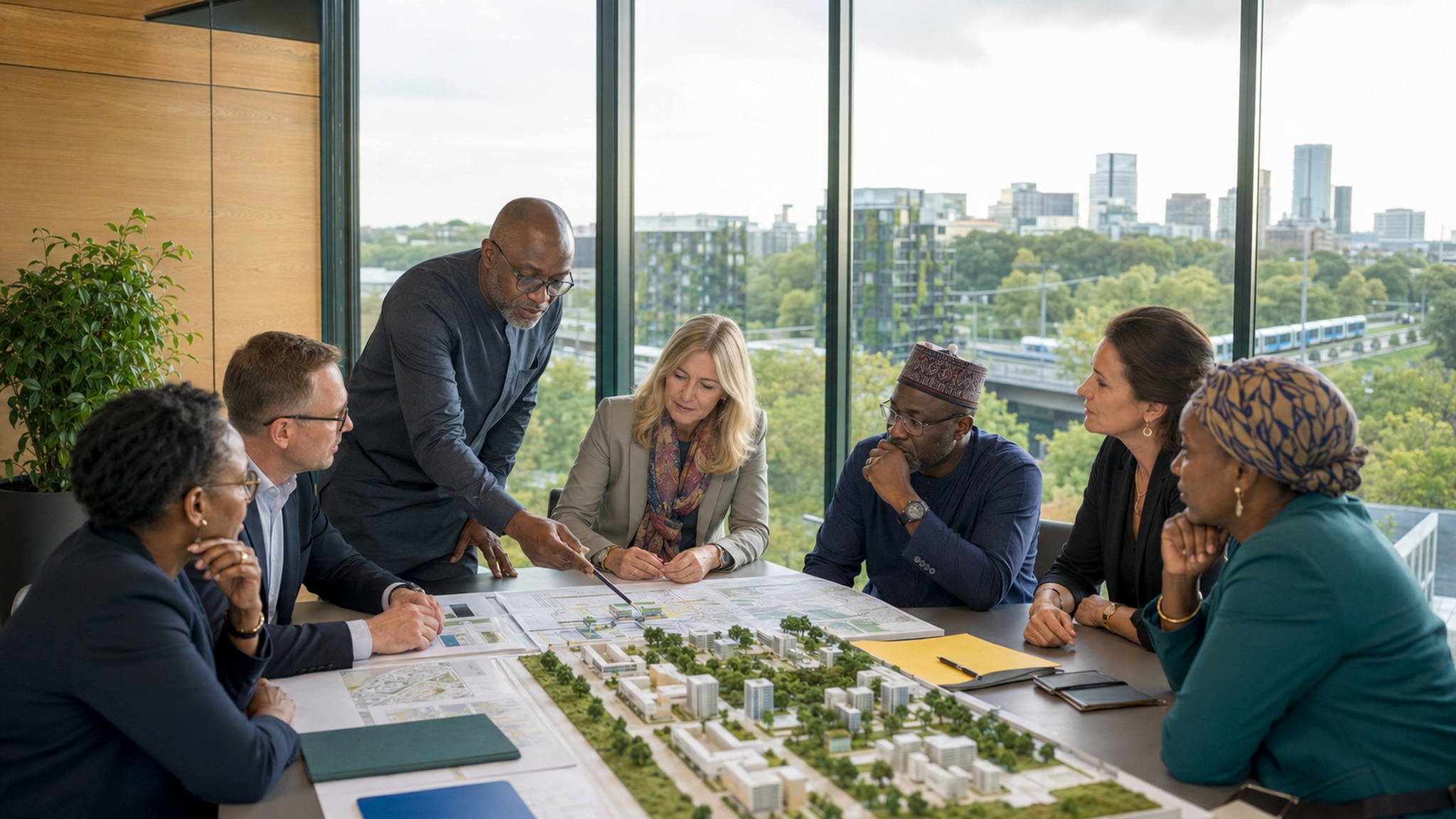
Why the programme — why now?
Turning climate commitments, urban-development priorities and international partnerships into practical projects, stronger institutions, green leadership and measurable impact.
The implementation gap
Policy, institutions, communities, expertise, technology, finance and implementation capacity must be organised around real priorities and accountable next steps.
“The programme exists to turn policy intent and international goodwill into practical, locally relevant delivery partnerships.”
The Nordic–Nigeria Green Cities Initiative is a year-round policy-to-project, partnership-to-implementation and people-to-impact platform. It complements existing public mandates rather than creating a parallel development agenda.
Its purpose is to help governments, institutions and partners translate priorities Nigeria has already adopted into coordinated programmes, better-prepared projects, stronger leadership and measurable outcomes.
National policy alignment
Nigeria’s NDC 3.0 was submitted to the UNFCCC on 22 September 2025. Its urban commitments create a clear case for coordinated implementation capability.
It is how we organise the partnerships, people, technology and capital required to deliver it.
NNGCS is designed as one potential implementation bridge.Integrate climate resilience into building standards and the built environment.
Advance climate-resilient urbanisation and green-building policy.
Develop smart, green and climate-resilient city pilots across the six geopolitical zones.
Integrate hazard mapping and risk zoning into planning frameworks across Nigeria’s 774 local governments.
One national agenda, connected mandates
Environment, housing, energy, transport, infrastructure, finance and local government intersect in the same streets, buildings, services and communities. NNGCS is designed to help those mandates meet around projects.
A convergence point for climate action, biodiversity, environmental awareness, restoration, clean energy and public–private collaboration.
A project pathway for sustainable housing, urban renewal, slum upgrading, green spaces, infrastructure and properly structured public–private participation.
A city-level bridge for renewable energy, efficient buildings, solar public infrastructure, smart lighting, clean mobility and resilient power systems.
A disciplined route for originating, screening and preparing credible projects before matching them with suitable finance and delivery partners.
A practical frame for waste segregation, recycling, plastics recovery, municipal systems, responsible processing and waste-to-value enterprises.
A potential implementation network connecting national policy with states, local governments, universities, markets, schools, communities and households.
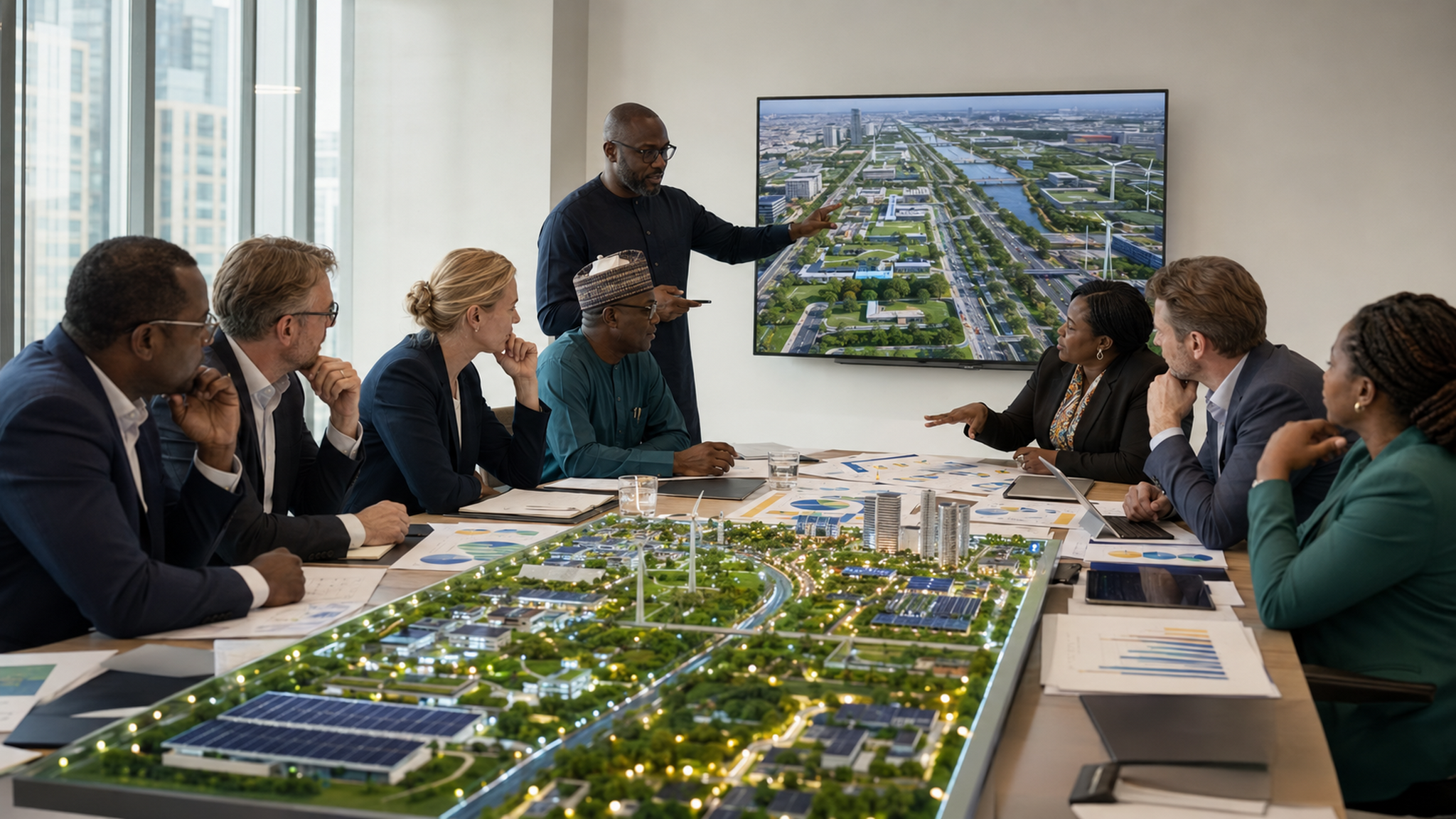 Concept visualisation
Energy transition & green infrastructure
Nigeria’s Energy Transition Plan connects net-zero ambition with energy access, industrial growth and economic development. At city level, that means practical opportunities in renewable energy, efficient buildings, solar public infrastructure, smart lighting, clean mobility and resilient power.
Green finance
Nigeria already has sovereign green-bond mechanisms and a growing climate-finance architecture. NNGCS is not positioned as a generic grant-seeking exercise; it is being developed to improve the quality of project origination and partnership conversations.
Environment, health & economic value
Cleaner systems can improve public health, resource productivity, community resilience and economic performance at the same time.
Waste segregation, plastics recovery, responsible recycling, smart municipal operations and circular businesses turn an environmental liability into a local-development opportunity.
Air quality, sanitation, road safety, noise, physical activity, green space and clean mobility shape health outcomes and health equity.
WHO urban-health evidenceReliable power, mobility, sanitation and climate-resilient infrastructure reduce disruption, protect livelihoods and improve the environment for investment and productivity.
World Bank ACReSAL sourceNNGCI Volunteer Corps
The Corps connects sustainability learning with practical service, professional exposure and community implementation. It is intended to complement—not replace or duplicate—government, university or NYSC programmes.
Any formal NYSC integration, CDS status or use of NYSC identity remains subject to prior written approval from the appropriate NYSC authorities.
Explore the Volunteer Corps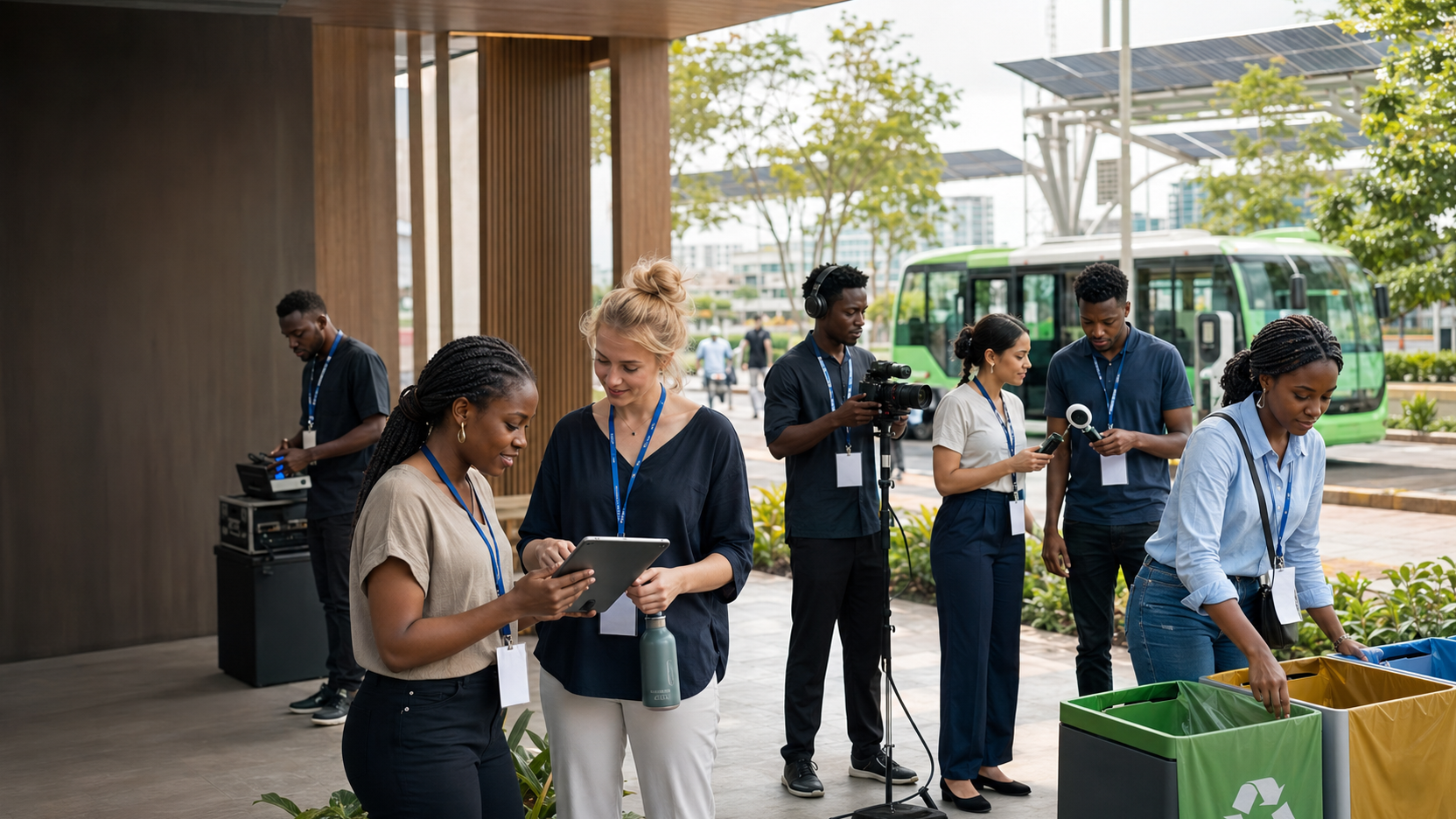 Concept visualisation
International alignment
The programme’s connected model supports multiple Sustainable Development Goals, with SDG 11 at the centre: making cities and human settlements inclusive, safe, resilient and sustainable.
Good Health & Well-being
Quality Education
Affordable & Clean Energy
Decent Work & Economic Growth
Industry, Innovation & Infrastructure
Sustainable Cities & Communities
Core urban goalResponsible Consumption & Production
Climate Action
Life on Land
Partnerships for the Goals
UN-Habitat’s framework links sustainable urbanisation with housing, land, basic services, prosperity, local finance, data and partnerships.
Explore the New Urban AgendaState Chapters, university networks, proposed NYSC pathways and community projects are designed as potential transmission mechanisms from policy to everyday places.
Explore local deliveryWhy the Nordic connection matters
NNGCS is not designed to transplant Scandinavian solutions into Nigeria. Nordic Bridge Partner’s role is to connect and facilitate—not to claim sole technical, institutional or financial capacity.
Organisations referenced across the website are prospective engagement targets unless a formal relationship is explicitly confirmed. Inclusion does not indicate endorsement, partnership, financing or participation.
One programme, connected components
Each component performs a different function. Together they connect convening, project origination, capital, demonstration, leadership, local expertise and accountable impact.
Convenes policy, expertise, projects, capital and decision-makers.
Develops long-term programmes and implementation partnerships.
Structures opportunities and connects suitable counterparts.
Demonstrate approaches after approvals, preparation and financing.
Mobilises people year-round for learning, service, community projects and local delivery.
Develop sustainability knowledge, innovation and emerging leaders.
Translates graduate leadership into service, subject to approval.
Provide multidisciplinary expertise and local coordination.
Verifies results, supports learning and guides responsible scale.
Why participate
Participation should begin with a defined role, contribution and outcome—not ceremonial visibility. These pathways show how each stakeholder group can enter the ecosystem responsibly.
Advance existing priorities, identify demonstration projects, shape pipelines, engage expertise and finance, explore PPPs and connect federal policy with state and local delivery.
Explore government partnershipAccess defined Nigerian city challenges, responsible pilot pathways, knowledge exchange, market intelligence and durable institutional relationships grounded in local ownership.
Explore strategic partnershipEngage opportunities through project identification, screening, technical preparation, safeguards, investment-readiness and structured capital conversations.
Explore the Investment ForumConnect ESG and CSR commitments with real projects, communities, emerging green markets, responsible technology demonstration and clearly defined partnership outcomes.
Explore project pathwaysDevelop chapters, research, innovation challenges, green careers and community projects. Any formal NYSC activity remains subject to written institutional approval.
Explore chapter pathwaysContribute engineering, planning, finance, energy, law, health, media, technology and community capability while developing experience, networks and green-economy exposure.
Join the Volunteer CorpsProgramme & Summit delivery leadership
Nordic Bridge Partner’s team supports programme design, institutional engagement, partnerships, coordination, communication, sponsorship, secretariat delivery and delegate experience. Formal public-sector, patron and network appointments remain separate processes.
Executive oversight, Nordic–African market access, institutional engagement and strategic governance.
Strategic partnerships, stakeholder engagement, commercial positioning and cross-border collaboration.
Business Development & Strategy Lead—leads NNGCI and NNGCS architecture, institutional partnerships, project coordination and implementation pathways.
Coordinates workstreams, logistics, vendors, timelines, operational readiness and on-site execution.
Strategic communications, brand stewardship, partner visibility and stakeholder coordination.
Partner and sponsor development, stakeholder engagement, creative direction and commercial positioning.
Schedules, documentation, action tracking, partner follow-up and day-to-day secretariat support.
Delegate experience, education partnerships, youth green skills and learning-programme coordination.
Policy & evidence sources
The programme’s positioning is informed by official Nigerian Government and international institutional sources. Links open the underlying source for independent review.
Policy alignment does not imply government endorsement of NNGCS. Project, finance, chapter and partnership statements describe proposed programme pathways unless explicitly confirmed otherwise.
The case for partnership
We are not asking governments, organisations or individuals simply to support a Summit.
We are inviting them to help build a national Green Cities movement and implementation platform.